
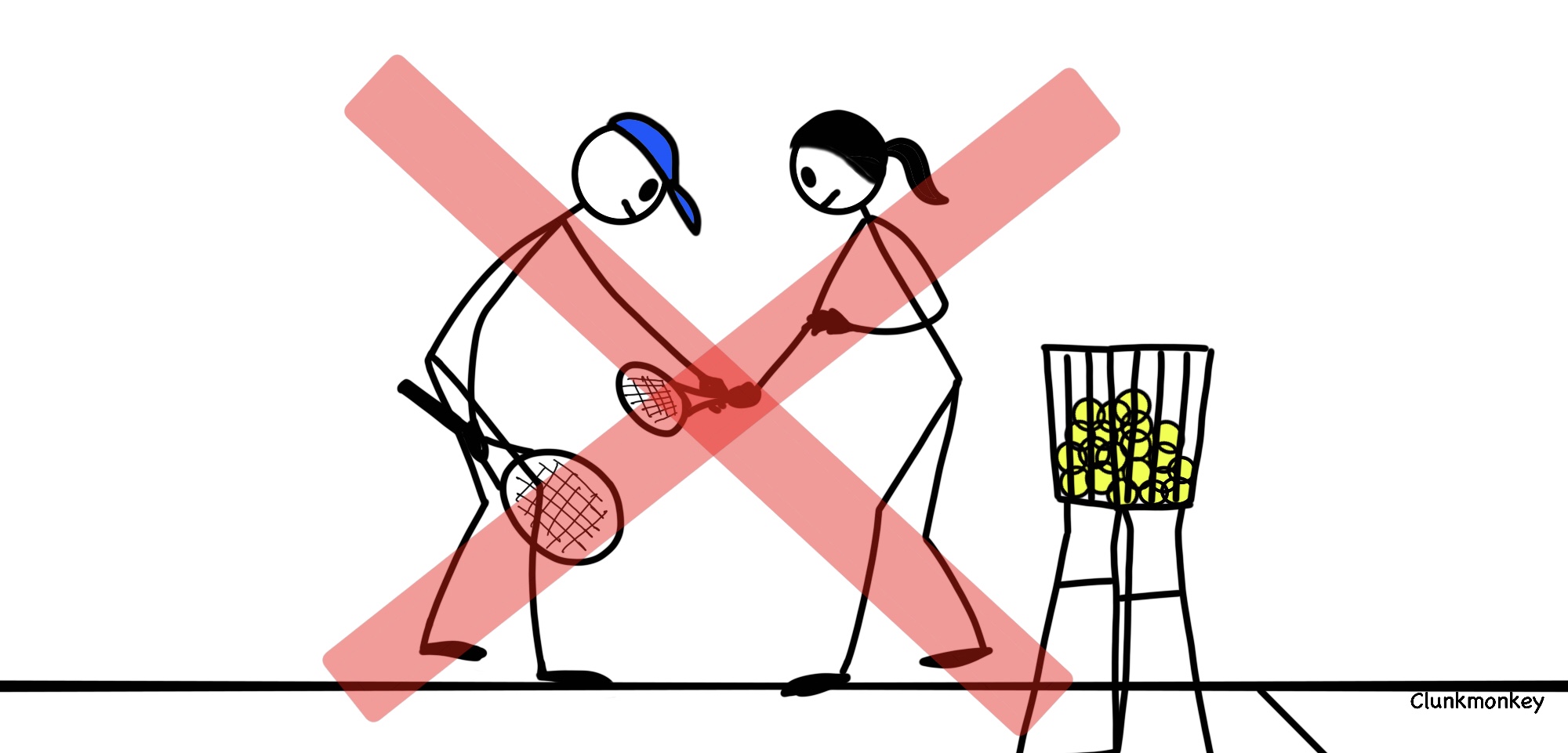
From where did you get the idea that technique needs to be taught?
You’re not sure, are you? Someone told you that’s the way it is… and you accepted it.
We have a hundred years of skills acquisition research behind us now. There is ZERO proof supporting the belief that technique needs to be taught. The research says that the technique, that matters, is naturally occurring.
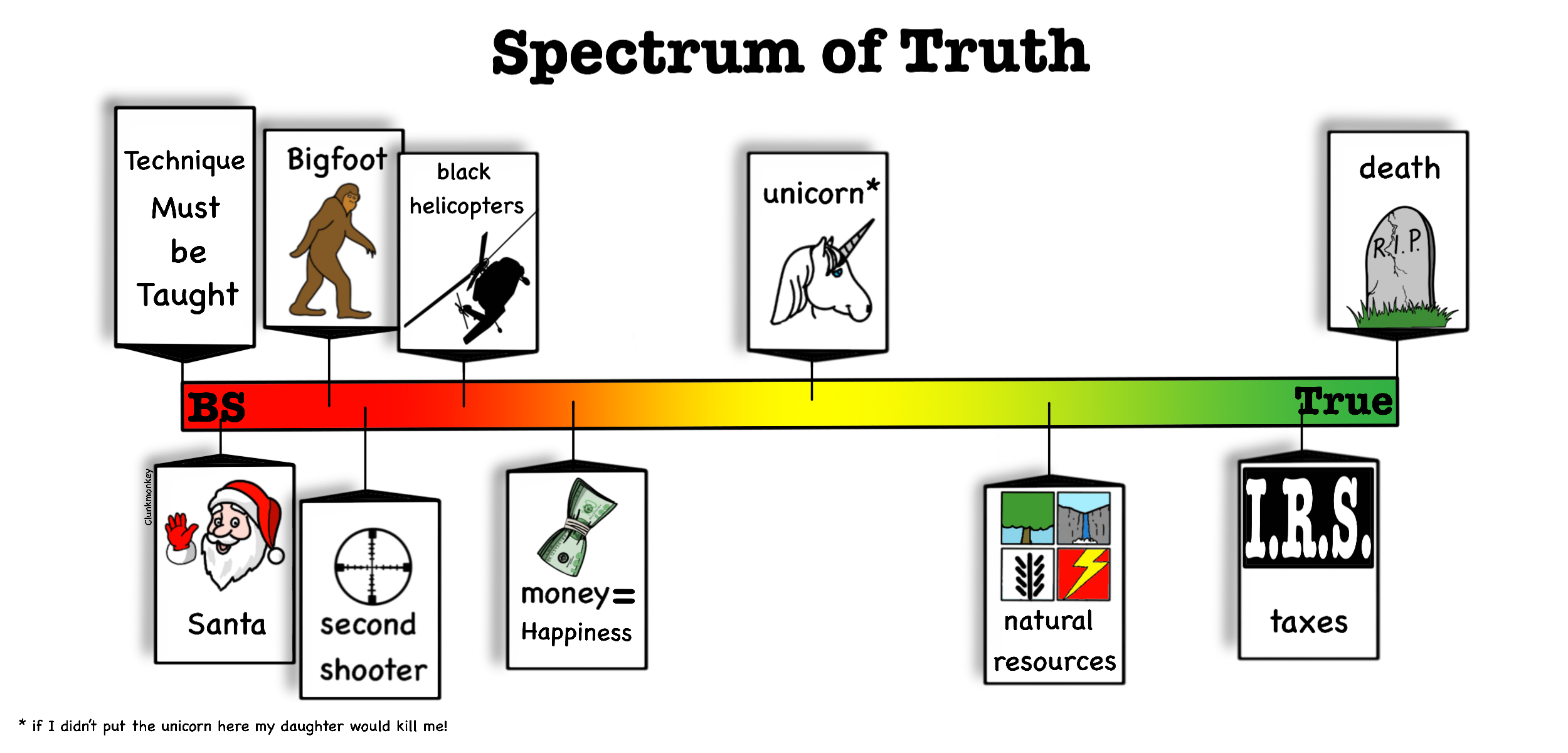
Within four weeks, there is no measurable difference in technical effectiveness between the learners who were prescribed technique and those who were encouraged to discover it.
Maybe you’re thinking… if there’s no difference, what’s the harm in teaching technique?
- it gives the impression that there are “right” ways. There are not. There are as many ways to hit, move, and play as there are finger prints.
- Those encouraged to discover their technique showed greater fluency with it. That is to say they had more ways of putting balls in play than their prescriptively taught colleagues.
Every tennis ball sent your way is a problem you need to solve. Compounding the situation, no problem will repeat. Obviously, you cannot memorize the solution to an unknown problem. Ergo, every solution is improvisational.
Tennis is not classical music. It’s jazz.
A match is a not a contest of technique. It’s a contest of improvisational solutions.
It follows that learning tennis is learning to McGuyver solutions on the fly. Therefore, lessons and practices must focus on improving solutions… in the context of point play.
Coaches can accelerate the learning by applying constraints that make the player come up with more, and different solutions. The more information a player has, the more solutions they can create.